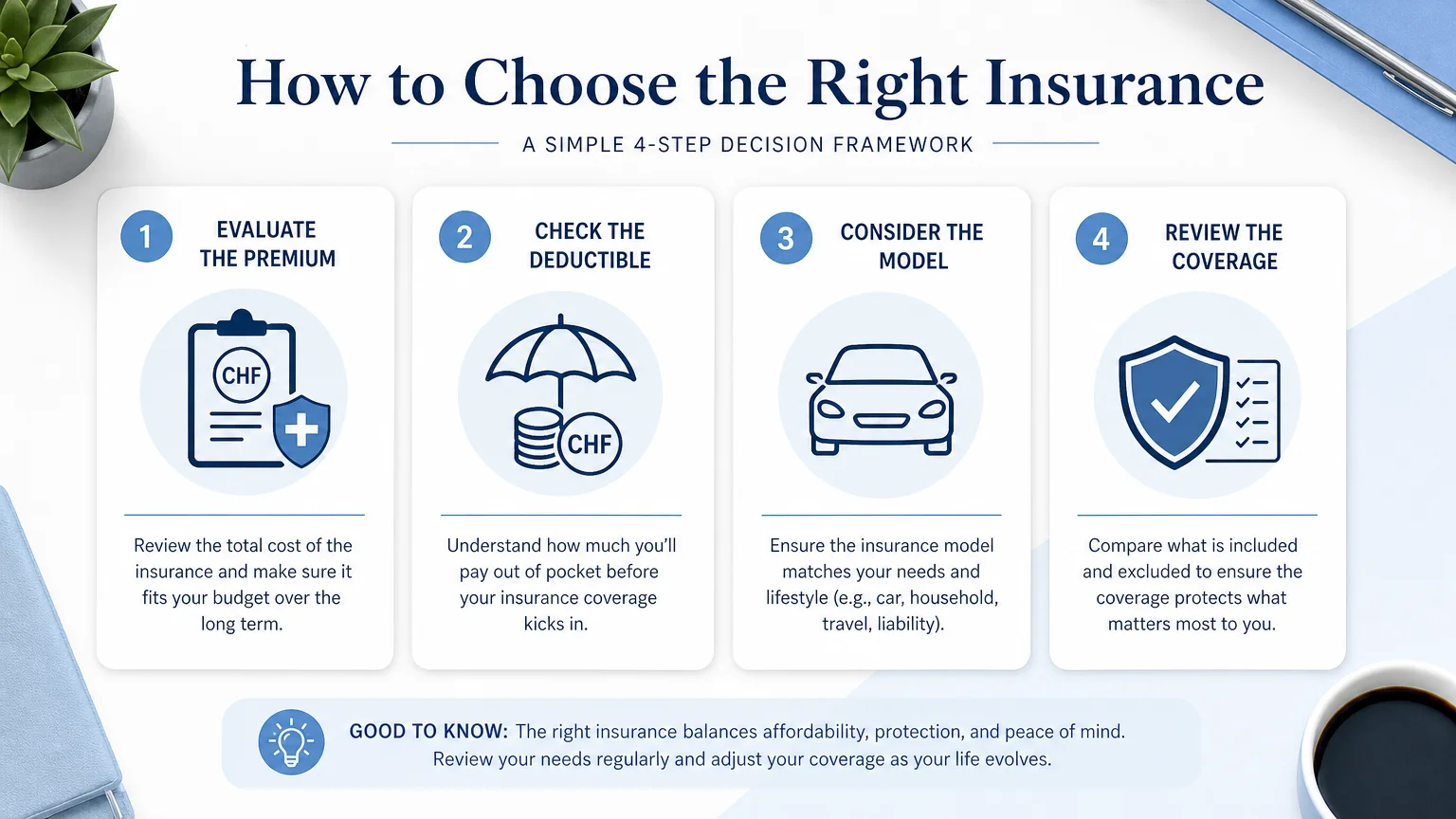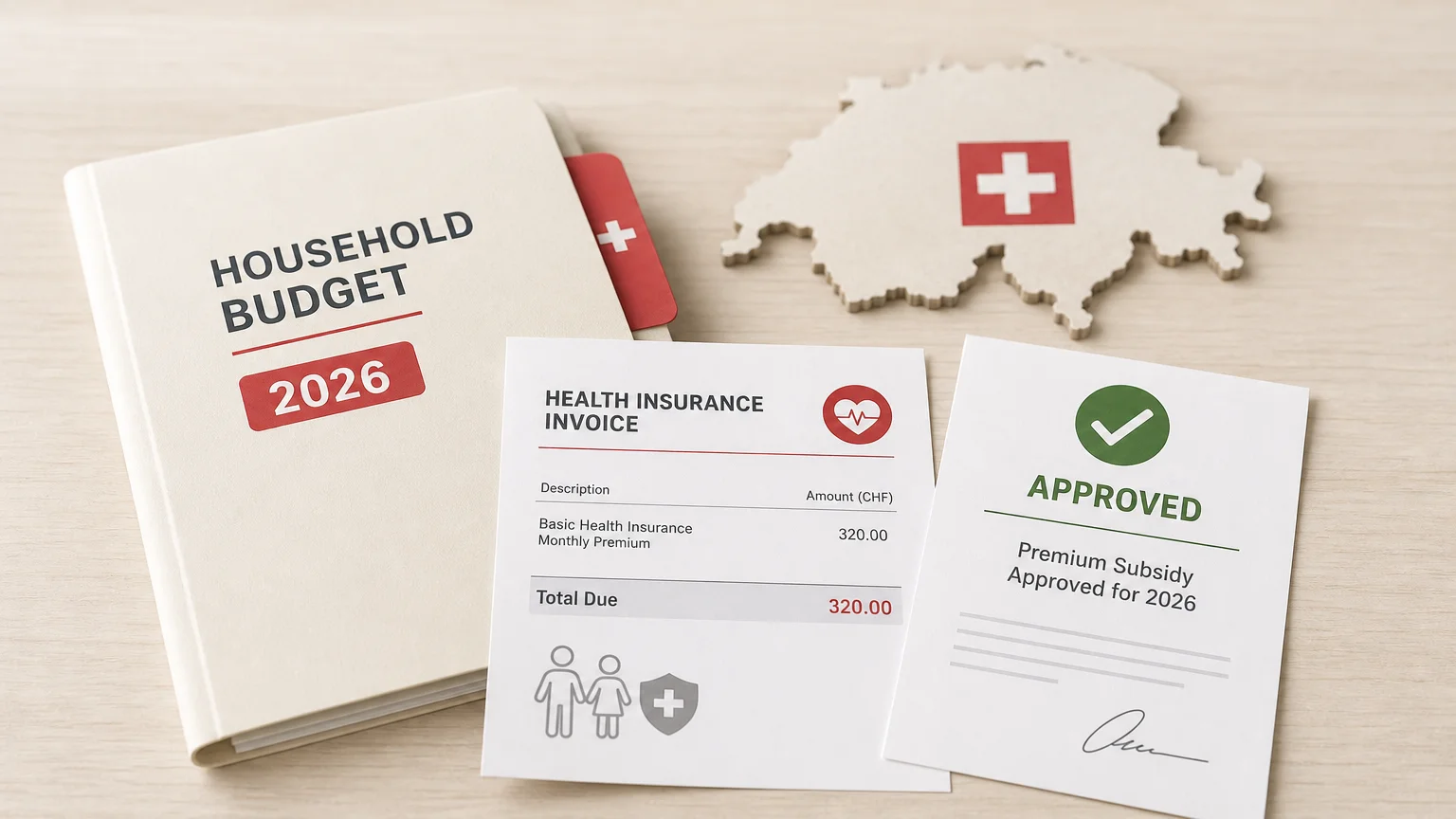
Could a cantonal decision make your Swiss health insurance bill easier to manage? It can, but the route depends on your canton, household, and tax situation. If you are reviewing your overall costs, start with our Swiss health insurance cost guide before checking subsidy eligibility.
Health insurance premiums increased by an average of 4.4% in Switzerland in 2026, reaching an average of CHF 393.30 per month. The FOPH figures help explain why a premium reduction can have a meaningful effect on a household budget.
What are premium subsidies in Switzerland?
Swiss premium subsidies are financial reductions for people and households in modest financial circumstances. They are also called premium reductions or individual premium reductions. The support applies to premiums for mandatory basic insurance, not automatically to voluntary supplementary coverage.
Your canton decides who qualifies, how much support is available, whether you must apply, and when the payment is made. This means there is no single national income threshold or application form for everyone. You must follow the process used by your canton of residence.
The federal government and the cantons finance the system together. For eligible families with low or middle incomes, children’s premiums must be reduced by at least 80%. Premiums for young adults in education must be reduced by at least 50%. These percentages describe minimum protection within the applicable rules, not a guaranteed amount for every household.
The Federal Office of Public Health guidance confirms that cantons generally pay approved reductions directly to health insurers. The insurer then deducts the amount from the premium invoice.
How do authorities decide whether you qualify?
The key question is not simply whether your gross salary appears low. Authorities usually assess your broader financial and family situation under the rules of your canton.
Depending on the canton, relevant information can include your taxable income, assets, marital status, number of children, and age. Your canton may also consider whether children or young adults are in education. The health insurance premium used in the calculation can depend on your location, age group, or insurance model.
Do not compare your gross salary with a threshold without reading the local calculation method. A person with the same gross income can receive a different result after deductions, household adjustments, or a change of canton.
Your residence also matters. The responsible office is usually linked to the canton where you live, rather than the insurer you selected. If you are reviewing insurers at the same time, our guide to finding the best health insurance in Switzerland can help you separate subsidy questions from insurance selection.
How to apply premium subsidies step by step
The practical process is straightforward, but missing a local deadline can prevent payment. The Swiss citizen portal explains that some cantons notify eligible residents automatically, while others require an application each year. Use the cantonal guidance for the authority responsible for your residence.
- Identify the responsible authority. Search for the premium reduction office in your canton. It may be a social insurance institution, compensation office, health department, or another designated authority.
- Check whether the process is automatic. Some cantons use tax data to identify potential beneficiaries. Others send a form that you must complete, or require you to request an application yourself.
- Confirm the deadline. Deadlines differ between cantons and may also depend on the application year. Record the date before collecting documents.
- Prepare accurate information. You may need tax details, household information, proof of residence, insurance details, and documents explaining a recent change in income or family circumstances.
- Submit the application completely. Review every field, attach the required documents, and keep a copy of the submission or confirmation.
- Monitor the decision. The authority will assess your case and communicate the result. If approved, the reduction should be transmitted to your insurer through the cantonal process.
If you have recently moved to Switzerland, changed jobs, started a family, or experienced a sharp income change, contact the authority before assuming that an automatic assessment will reflect your situation. Ask which documents it accepts and whether you can request an assessment based on updated information.
What happens after approval or a change in circumstances?

Approval does not usually mean that you receive a separate cash payment. The canton informs your health insurer, and the reduction is reflected in the premium statement or a later credit. The exact presentation can vary, so read the decision letter and compare it with your next invoice.
A full premium invoice before the reduction is processed does not necessarily mean that your application was rejected. Check whether the authority has sent the decision to the insurer. If the reduction is missing after approval, contact the cantonal office first and ask whether additional information is required.
Your eligibility can change when your circumstances change. A new job, unemployment, parental leave, marriage, separation, a birth, or a move can affect the calculation. Notify the responsible authority promptly instead of waiting for the next ordinary assessment.
Pay attention to possible corrections as well. Some cantons use provisional information and later reconcile the amount with final tax data. If your income increases, you may receive less support or need to repay an overpayment. Keep records of decisions, invoices, and documents so that you can explain any difference.
Can you combine a subsidy with other premium savings?
Yes, a premium reduction can be considered alongside other basic insurance decisions. You can review your insurer, insurance model, accident cover, and deductible, provided each choice remains appropriate for your medical needs and financial capacity.
The system remains decentralized. A 2026 country profile confirms that Swiss cantons set their own eligibility criteria and application processes. This is why a comparison made for one canton cannot automatically be applied to another.
A higher deductible may reduce your monthly premium, but it also increases the amount you may pay when using healthcare services. Before changing it, calculate the total annual cost under both low-use and high-use scenarios. Our guide to choosing your health insurance deductible explains the main trade-offs.
You should also keep mandatory and supplementary insurance decisions separate. A subsidy normally concerns basic cover, while supplementary policies involve different conditions, underwriting questions, and cancellation rules. For a wider review of protection needs, our Swiss insurance essentials guide provides broader context.
Professional support can be useful when several decisions overlap. We can help you understand how health insurance, tax planning, income protection, pension choices, and household needs fit together. Advice should clarify the options and costs, not replace the decision of the responsible cantonal authority.
Apply carefully and keep your information current
The safest approach to applying for a premium reduction is to start with your canton, not your insurer. Confirm the local rules, distinguish taxable income from gross salary, meet the deadline, and report important changes promptly. In 2026, rising premiums make the support valuable, but accurate information remains the foundation of a correct decision.
Take action with Mathias Sudres
Premium subsidy questions often appear alongside broader decisions about health insurance, taxes, pension planning, and income protection. When several choices affect your household budget, a structured review can make the consequences easier to understand.
We begin with a free initial chat about your situation, goals, and concerns. We compare relevant Swiss options, explain costs and implications clearly, support implementation, and remain available for follow-up questions. To discuss your wider needs, contact our independent Swiss insurance and pension advisory.
Frequently Asked Questions
Do I apply for a premium subsidy through my insurer?
You usually apply through the authority responsible for your canton of residence, not directly through your insurer. The canton communicates an approved reduction to the insurer, which then applies it to your premium statement.
Which income is used to assess eligibility?
The relevant figure is generally based on the canton’s calculation of your taxable financial situation, not simply your gross salary. Income, assets, household composition, and other local factors can affect the result.
Can children and young adults receive additional support?
Children and young adults in education receive specific protection under Swiss premium reduction rules. The amount and conditions still depend on household circumstances and the rules applied by your canton.
What should I do if my financial situation changes?
Contact the responsible cantonal authority and explain the change as soon as possible. Ask whether it can reassess your entitlement using updated income or household information.
Can Mathias Sudres help me with related insurance decisions?
Yes, we provide personalized advice on Swiss insurance, pension planning, tax strategies, disability protection, and supplementary coverage. We can help you understand how these decisions interact, while the canton remains responsible for deciding premium subsidy eligibility.