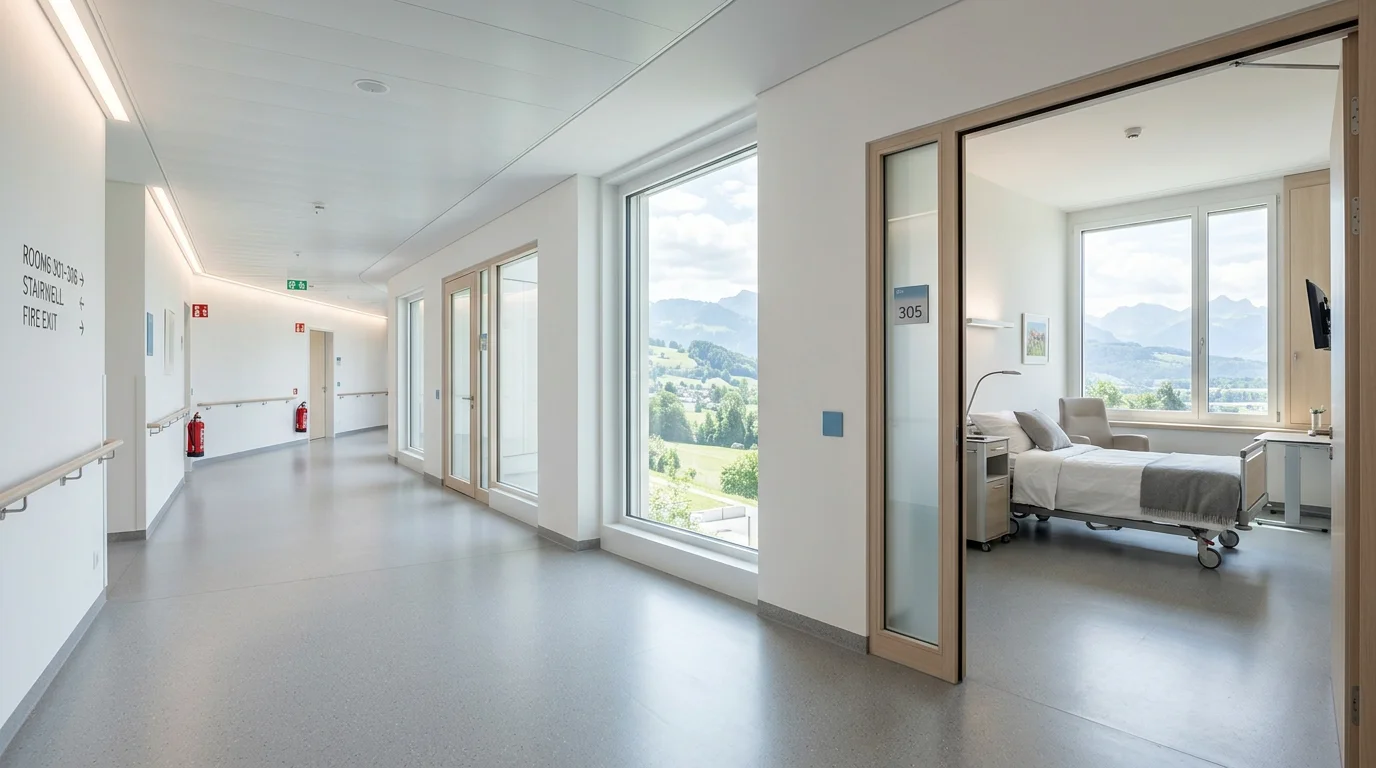
In Switzerland, roughly one in four residents pays extra for coverage that mandatory basic insurance does not include, yet many people remain unsure what that money actually buys. When a hospital stay becomes necessary, the difference between a shared ward and a private room can shape both comfort and choice of doctor. Understanding the difference between semi-private and private hospital insurance is therefore a practical financial decision, not a luxury detail. Before committing, it helps to read our guide to private health insurance in Switzerland.
Basic insurance (KVG/LAMal) already guarantees excellent inpatient care in the general ward of hospitals on your cantonal list. Supplementary cover adds comfort, flexibility and choice. According to the Commonwealth Fund, around 28 percent of Swiss residents purchase voluntary supplementary private insurance to cover services such as private or semi-private hospital rooms. The question is whether those extras justify the premium in your situation.
What basic insurance covers, and where supplementary cover begins
Every resident must hold mandatory basic health insurance, which covers hospital treatment in the general ward of approved cantonal hospitals. The care itself is high quality; what changes with supplementary plans is accommodation, doctor choice and geographic flexibility. This is exactly where the debate over semi-private vs private hospital insurance begins, because both are optional upgrades regulated under private insurance law (VVG/LCA) rather than the basic scheme.
Unlike basic insurance, which must accept everyone, supplementary policies operate on different rules. Insurers can assess your age and medical history before deciding whether to offer you a contract. For a wider view of how these products fit alongside other coverage, see our essential guide to insurance in Switzerland.
Semi-private hospital insurance explained
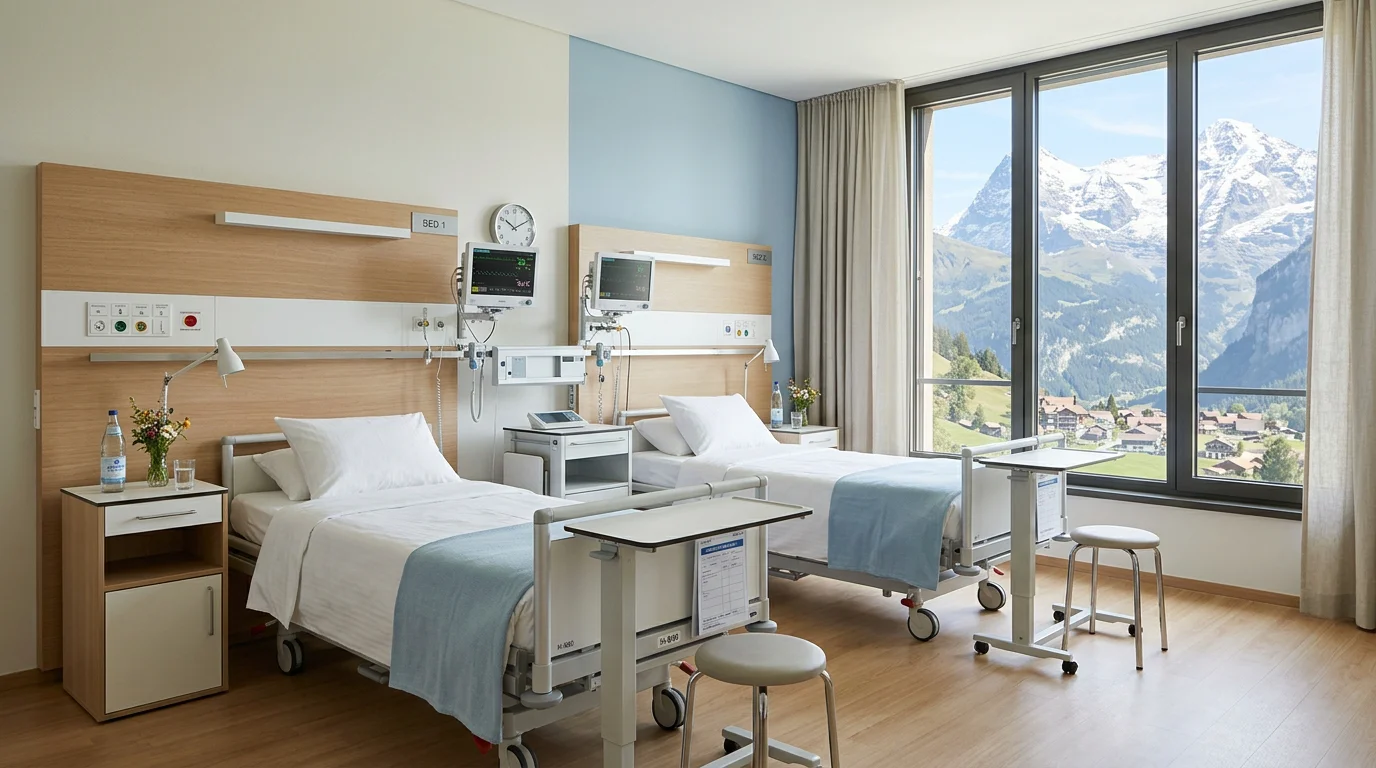
Consider a planned knee operation. With semi-private cover, you would typically stay in a two-bed room and gain the right to be treated by a senior physician, not only the doctor on duty. Coverage usually extends to hospitals across Switzerland rather than only those in your canton.
The practical value depends on where you would be treated. Many modern Swiss hospitals already reduce their general wards to just two or three beds per room, which narrows the comfort gap. Semi-private cover still adds meaningful flexibility through doctor choice and nationwide hospital access, and some plans include extras such as contributions toward births, rooming-in, or convalescence stays.
Private hospital insurance explained
Private cover raises both the comfort and the price. It entitles you to a single room, treatment by the chief physician, and typically a broader network that includes private clinics. For patients who prioritise privacy, undisturbed rest and continuity with a specific specialist, this is the most complete option available.
It is worth remembering that choosing the chief physician is not automatically superior in clinical terms. A motivated younger doctor may follow your case just as closely. The genuine advantages of a private plan are the guaranteed single room, faster scheduling in some cases, and access to clinics that would otherwise fall outside your coverage. To compare the insurers active in this segment, consult our overview of Swiss insurance companies.
Semi-private and private compared side by side
The table below sets out the core distinctions and shows where independent guidance fits into the decision. Figures for rooms and access reflect typical market terms; the exact benefits vary by insurer and contract.
| Criterion | Semi-private | Private | Independent advice with us |
|---|---|---|---|
| Room | Two-bed room | Single room | Matched to your real needs and budget |
| Physician access | Senior physician | Chief physician | Clarified against your medical profile |
| Hospital and clinic choice | Public hospitals Switzerland-wide | Public and private clinics | Whole-market comparison, no tied products |
| Typical cost level | Moderate | Higher | Optimised across the full Swiss market |
| Best for | Comfort with a balanced premium | Maximum privacy and flexibility | Anyone wanting a transparent, tailored decision |
Where the choice is genuinely close, an impartial comparison prevents overpaying. As independent, FINMA-registered advisers, we evaluate the whole Swiss market rather than a single insurer's catalogue.
Costs and what drives your premium
Premiums for supplementary hospital insurance are risk-rated, which means they reflect your age, sex, health status and place of residence. Because there is no publicly regulated tariff, prices differ sharply between providers. According to a study published in a peer-reviewed analysis, a 50-year-old new male enrollee in the canton of Zurich faced roughly CHF 1,800 to 6,600 per year for private hospital insurance in 2023, illustrating how wide the spread can be.
Several levers influence the final figure. A higher deductible lowers the premium but increases what you pay out of pocket. Excluding accident cover reduces cost if your employer already insures you against accidents. Age brackets matter too, because premiums usually rise as you move into each new bracket, so the price you see today is rarely the lifetime cost. Our comparison of Swiss health premiums shows how to read these differences.

Is the upgrade worth it in 2026?
Start with what you already have. If you work more than eight hours a week for a Swiss employer, you are covered against accidents, and some employers add supplementary accident cover for semi-private wards. Reviewing that protection first can prevent paying twice for the same benefit.
Cost pressure also matters. The Federal Office of Public Health confirmed that basic health insurance premiums rise by an average of 4.4 percent in 2026, reaching CHF 393.30 per month. With household budgets already stretched, a supplementary premium should reflect a benefit you will realistically use. A flex-type hospital plan, which grants semi-private benefits with higher deductibles, can be a measured middle path for younger, healthy applicants who still want the option in an emergency.
Making a confident, informed choice
Choosing between semi-private and private hospital insurance comes down to three practical questions: how much privacy you want, how much flexibility over doctors and clinics you value, and what premium you can sustain as you age. Semi-private cover offers balanced comfort at a moderate price, while private cover maximises privacy and access for a higher cost. Review your existing accident cover, confirm the room standard of hospitals you would actually use, and weigh the lifetime trajectory of the premium rather than only today's figure before you commit.
Take action with Mathias Sudres
Deciding between comfort tiers is easier when someone maps the whole market to your situation rather than selling you one product. If you want clarity on which hospital cover genuinely fits your health, budget and long-term plans, professional guidance removes the guesswork and protects you from overpaying.
As an independent, FINMA-registered adviser, we compare providers across the entire Swiss market with full transparency, no tied products and no hidden commissions. From a free initial conversation to implementation and ongoing support, you can rely on our independent FINMA-registered insurance advice to structure a solution around your needs, backed by more than ten years of experience helping clients in Switzerland.
Frequently Asked Questions
What is the main difference between semi-private and private hospital insurance?
Semi-private cover entitles you to a two-bed room and treatment by a senior physician, while private cover provides a single room and access to the chief physician. Private plans also tend to include a broader network, often extending to private clinics.
Can an insurer refuse my application for supplementary hospital insurance?
Yes. Unlike mandatory basic insurance, supplementary hospital cover is voluntary, so insurers can decline applicants or set restrictions based on age and pre-existing conditions. Applying while you are younger and in good health generally improves your chances.
Do I still need semi-private cover if hospitals already use small rooms?
Not necessarily for the room alone, as many Swiss general wards now house only two or three patients. However, semi-private cover still adds doctor choice and nationwide hospital access, which may justify the premium for you.
How can I avoid paying twice for hospital comfort?
Check the accident insurance provided through your Swiss employer, because some policies already include semi-private ward cover for accidents. As independent advisers, we can review your existing protection so you only insure the gaps that remain.
Is private hospital insurance worth the higher premium?
It depends on how much you value guaranteed privacy, chief-physician treatment and access to private clinics. If those benefits matter to you and the premium remains sustainable as you age, private cover can be a sound choice.