
Roughly 1.6 million people in Switzerland hold a policy with SWICA, yet many residents still ask what the four letters actually represent. The answer is less obvious than it appears, because the meaning of SWICA depends entirely on the context in which you encounter the name. For a broader view of the players involved, you may consult our overview of Swiss insurance companies before reading further.
In Switzerland, SWICA refers to a health and accident insurer with deep historical roots. According to SWICA key figures, the organisation serves around 1.6 million insured persons and more than 31,000 corporate clients. Elsewhere, notably in American federal law, the acronym carries an entirely different administrative purpose that has nothing to do with healthcare.
What the SWICA name actually means
To understand the swica meaning, you must start with a merger rather than a dictionary. SWICA is not a word spelled out letter by letter. It is the brand adopted in 1992, when four separate Swiss health insurers combined into one healthcare organisation.
Those four funds carried long histories of their own. They were OSKA in Eastern Switzerland, founded in 1870, ZOKU in Zurich from 1922, SBKK in Winterthur from 1943, and Panorama in Winterthur from 1989. Their union produced the SWICA Healthcare Organisation that Swiss residents recognise today.
Because the name is a brand rather than a defined abbreviation, there is no official phrase that each letter unlocks. This is common among Swiss insurers, where memorable, pronounceable names took priority over literal descriptions during consolidation.
SWICA as a healthcare organisation, not only an insurer

SWICA presents itself as more than a policy provider. Its stated mission focuses on helping customers stay healthy, recover, or live well with a health restriction. This positioning as a healthcare organisation shapes its services, from telemedicine to workplace health management.
The scale behind that mission is significant. For the financial year 2024, SWICA reported a premium volume of CHF 5.9 billion and a corporate profit of CHF 88.9 million. It entered 2025 with approximately 1.6 million insured persons, which places it among the larger health and accident insurers in the country.
Over the decades, the group expanded beyond pure insurance. It launched the santé24 telemedicine service, built health centres, and introduced pharmacy-first and family-doctor models designed to manage rising healthcare costs.
A different SWICA: the State Wage Information Collection Agency
If you found the acronym in an American document, the meaning changes entirely. In United States federal regulations, SWICA stands for a State Wage Information Collection Agency. This has no connection to Swiss health insurance.
Under federal housing regulations, a State Wage Information Collection Agency is the state body that receives quarterly wage reports from employers. Such agencies support income verification for programmes administered by bodies like the Department of Housing and Urban Development.
The lesson is practical. Before interpreting the letters, confirm whether you are reading about Swiss health insurance or American income and eligibility verification. The two contexts share nothing but four coincidental characters.
Where SWICA fits in the Swiss health insurance market
Swiss healthcare rests on a simple rule. Every resident must hold compulsory basic insurance, and coverage must begin within three months of arrival or birth. SWICA is one of the many insurers authorised to provide it.
Supervision is split between two authorities. According to the Federal Office of Public Health, insurers offering compulsory insurance are supervised by that office, while supplementary insurance falls under the Financial Market Supervisory Authority, FINMA. SWICA operates under both regimes depending on the product.
Understanding this split matters when you compare offers. Basic benefits are identical by law across every insurer, so the differences you pay for lie in service, models, and supplementary cover. Our guide to private health insurance in Switzerland explains where SWICA and its competitors diverge.
What SWICA covers, from basic to supplementary
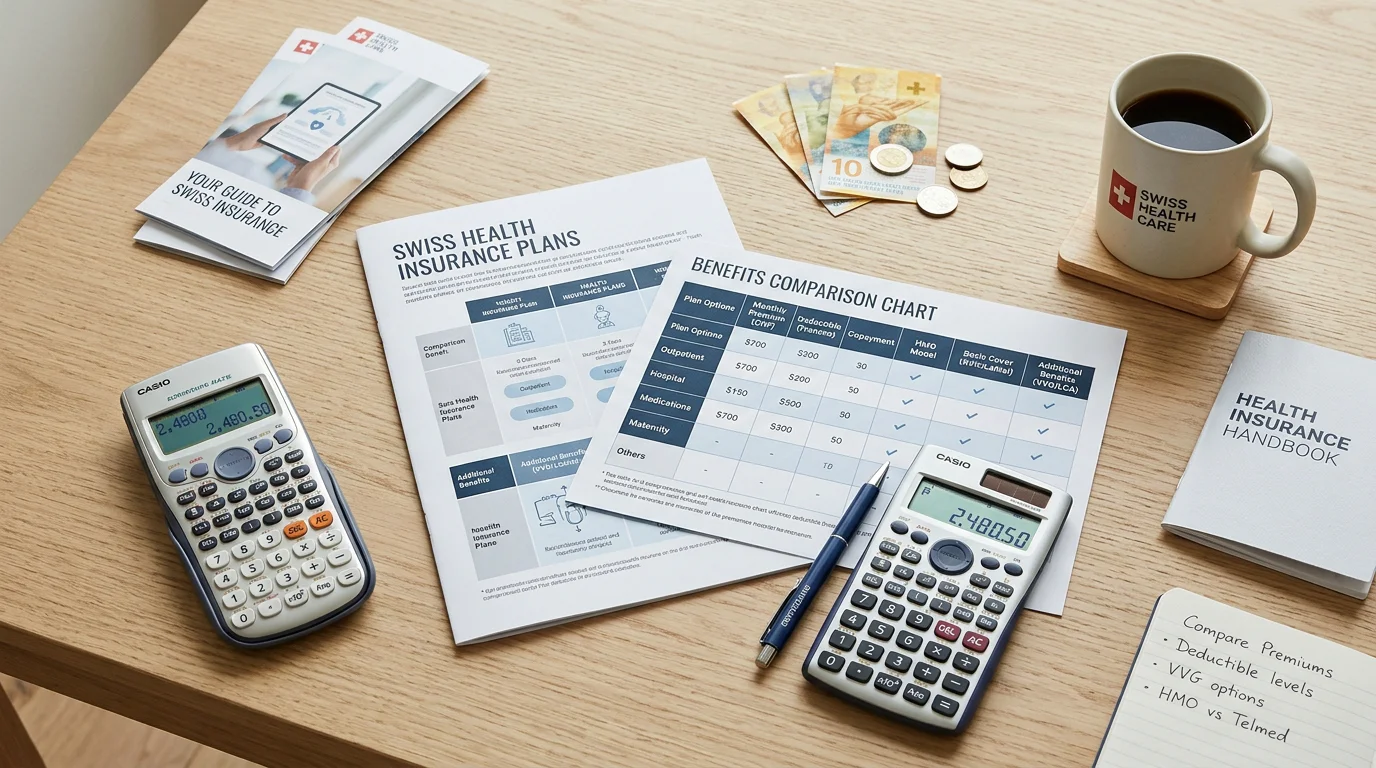
SWICA covers the standard package required under Swiss law, plus a range of optional add-ons. Its supplementary insurance products extend into outpatient care, hospital comfort tiers, and worldwide treatment for people living abroad. The santé24 medical line operates around the clock.
Supplementary cover is not a niche choice in Switzerland. According to market data, more than 80% of Swiss residents hold some form of supplementary coverage, chosen from roughly 60 insurers. SWICA competes within that crowded field, notably on wellness benefits worth up to CHF 1,300 per year for eligible policyholders.
Product naming can be complex, and coverage details differ by canton and plan. If you are weighing SWICA against another provider, our guide to what CSS stands for in healthcare offers a useful comparison point within the same market.
Choosing SWICA the right way
Knowing what SWICA means is only the first step. Selecting the right insurer, model, and supplementary plan requires comparing the whole market rather than one brand in isolation. The table below sets out three common approaches.
| Approach | Market-wide comparison | Full transparency | FINMA-registered | Ongoing personal support |
|---|---|---|---|---|
| Buying direct from one insurer | Limited to a single provider | Varies | Insurer supervised | Provider led |
| Online comparison portal | Broad but automated | Limited | Varies | Mostly self-service |
| Our independent advisory | Yes, across the Swiss market | No tied products, no hidden commissions | Yes (F01519559) | Yes, with long-term follow-up |
As an independent, FINMA-registered advisory, we compare providers across the market and explain each solution clearly, so you decide with full understanding. That neutrality is precisely what a single insurer cannot offer you.
Making sense of the SWICA name
The meaning of SWICA is contextual: in Switzerland it names a healthcare organisation and health insurer born from a 1992 merger, while in United States law it denotes a State Wage Information Collection Agency. For Swiss residents, the practical question is not the etymology but the fit. Confirm the context first, then compare basic and supplementary options across the market before committing, because identical basic benefits mean you are ultimately paying for service, models, and advice.
Take action with Mathias Sudres
Once you understand what SWICA represents, the harder task begins: deciding whether it, or another insurer, truly suits your situation, your budget, and your long-term plans in Switzerland.
We provide independent, FINMA-registered insurance and pension advice built around a transparent process: a free initial chat, a market-wide comparison, clear explanations, and ongoing support. With over ten years of experience and no hidden commissions, we help you choose with confidence. To review your options without obligation, book your free independent insurance and pension review and let us compare the market on your behalf.
Frequently Asked Questions
What does SWICA stand for?
In Switzerland, SWICA is a brand name rather than a literal acronym. It was adopted in 1992 when four health insurers merged into the SWICA Healthcare Organisation. The letters do not expand into a defined official phrase.
Is SWICA the same as the American SWICA agency?
No, the two are entirely unrelated. The Swiss SWICA is a health and accident insurer, while the American SWICA is a State Wage Information Collection Agency used for income verification. They share only the four letters.
Does SWICA offer supplementary insurance?
Yes, SWICA provides both compulsory basic insurance and a range of supplementary products. These extend to outpatient care, hospital comfort tiers, and worldwide cover. Supplementary insurance in Switzerland is supervised by FINMA.
How large is SWICA in Switzerland?
SWICA entered 2025 with around 1.6 million insured persons and more than 31,000 corporate clients. For the 2024 financial year, it reported a premium volume of CHF 5.9 billion. This makes it one of the larger Swiss health insurers.
How can I compare SWICA with other Swiss insurers?
Because basic benefits are identical by law, the meaningful differences lie in service and supplementary cover. We compare providers across the entire market independently and explain each option clearly. This helps you decide without pressure from any single insurer.